
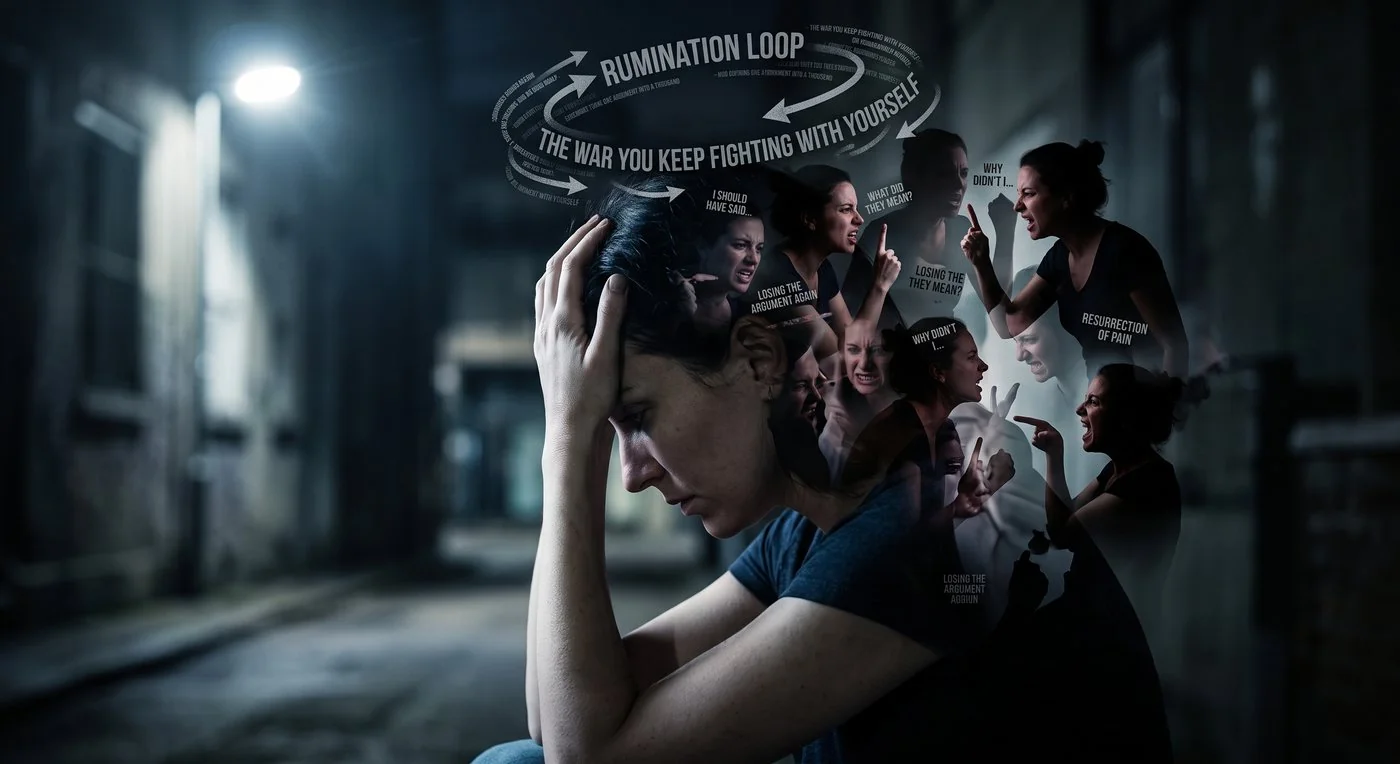
Why do we keep replaying arguments in our heads long after they end? The answer is a psychological pattern called rumination, and there is a war many people fight every single day because of it, one almost no one else knows is happening. It has no visible opponent, no physical wound, and no witnesses. It takes place entirely behind the eyes, in the silent theatre of the mind, and the strangest part is this: we are usually the ones who started it, and we are usually the ones who refuse to let it end.
We call it thinking. It is often something closer to self-inflicted harm.
The Argument That Refuses to Die
Somewhere in our evolutionary wiring sits a mechanism built to replay danger, so we could learn from it and survive it next time. That same mechanism, in modern life, now replays an argument from three weeks ago on a loop, word for word, insult for insult, long after the person on the other side of it has moved on and forgotten your name.
This is not memory. Memory would let it rest. This is resurrection, performed nightly, by a mind that mistakes repetition for resolution. We do not simply recall the argument. We relive it, rewrite it, win it a hundred different ways in our heads, and somehow still walk away from each imagined victory feeling worse than before.
The Body Does Not Know It Is Only a Memory
Here is the part that should genuinely disturb you: your body cannot tell the difference between an argument happening right now and an argument you are merely remembering. The adrenal glands do not check the calendar before they flood you with cortisol and adrenaline. They respond to the story your mind is telling, not to the reality standing in front of you.
Which means a conversation that ended weeks ago can still be poisoning your bloodstream tonight. Chronic exposure to these stress hormones does not politely fade away. It erodes sleep, disrupts digestion, tightens muscle, clouds cognition, and over enough time, wears down the cardiovascular system itself. We are not describing discomfort. We are describing a slow, self-administered toll on the body, paid in instalments, for a debt that was never actually owed.
What Is Rumination? Not Reflection, But a Trap Dressed as Thought
There is a seductive lie inside rumination, the sense that if we just think about it enough, we will finally understand it, resolve it, or protect ourselves from it happening again. But rumination does not process an emotion. It rehearses it. Each replay does not shrink the wound, it reopens it, and convinces the nervous system that the threat is still live.
This is the cruel architecture of the loop. It feels like problem-solving. It behaves like punishment.
The Behaviours We Have Agreed Not to Notice
The internal war of rumination rarely travels alone. It sits inside a much wider culture of harm we have collectively decided to call normal, because naming it clearly would force us to do something about it.
- Passive-aggressiveness trades honesty for silent punishment, sarcasm, and withheld affection, corroding relationships slowly enough that no single moment ever looks like the crime.
- Gaslighting rewrites another person’s reality until they can no longer trust their own perception, one of the most quietly devastating forms of psychological control available to another human being.
- Gossip launders cruelty through the appearance of concern, destroying reputations in rooms the victim will never enter.
- Toxic positivity smiles while it silences, insisting that pain be dressed up or hidden entirely, until people stop believing their own grief is allowed to exist.
- Overworking gets applauded as virtue while it quietly dismantles the body and the relationships around it, one skipped dinner, one missed birthday, one collapsed night’s sleep at a time.
- Body shaming and unrealistic beauty standards manufacture inadequacy at scale, then sell the cure back to the very people the wound was inflicted upon.
- Toxic masculinity teaches boys to amputate their own emotional vocabulary, then wonders, decades later, why so many men cannot name what they feel, let alone survive it.
- Blaming victims protects the comfort of the group at the direct expense of the person who was already harmed, a second wound delivered by the very community that should have offered shelter.
- Microaggressions, interrupting, excessive screen time, consumerism. Smaller in appearance, identical in function. Each one teaches someone, in a small daily dose, that their voice, their presence, or their worth is somehow negotiable.
None of these are abstract social issues confined to headlines. They live in ordinary rooms, ordinary marriages, ordinary workplaces, often wearing the disguise of humour, ambition, or simply the way things have always been done.
Interrupting the Loop
Self-awareness is the only exit, and it is a narrow one. The moment you catch yourself mid-replay, mid-argument-you-are-not-actually-in, is the only moment where a different choice becomes possible. Mindfulness, journaling, and honest conversation with someone you trust do not erase the mechanism. They interrupt it, again and again, until the interruption itself becomes the new habit.
This is not a soft, aspirational idea. It is the only known defence against a war that will otherwise run indefinitely, entirely undetected, inside a mind that believes it is simply thinking things through.
The argument ended weeks ago. The only person still fighting it is you. And you are the only one who can call the war off.
Frequently Asked Questions
Why do I keep replaying arguments in my head?
This is rumination, a mental pattern where the brain repeats a distressing scenario in an attempt to resolve it, instead of resolving the emotion, each replay reinforces it and keeps the body’s stress response active.
Can overthinking and rumination actually affect physical health?
Yes. Chronic rumination keeps cortisol and adrenaline elevated long after the original event has ended, which over time is linked to disrupted sleep, digestive issues, muscle tension, weakened cognition, and increased cardiovascular risk.
How do I stop ruminating on a past argument?
Start by naming the pattern the moment you notice it, then interrupt it deliberately through mindfulness, journaling, or talking it through with someone you trust, the goal is not to suppress the thought but to stop rehearsing it on a loop.